Article
Read the full piece
AI, ATS and Recruitment: What Every Job Seeker Must Understand
The recruitment process has changed.
You can have the right qualifications, years of experience, and the skills an employer needs—and still struggle to get your CV noticed.
Why?
Because recruitment is increasingly digital.
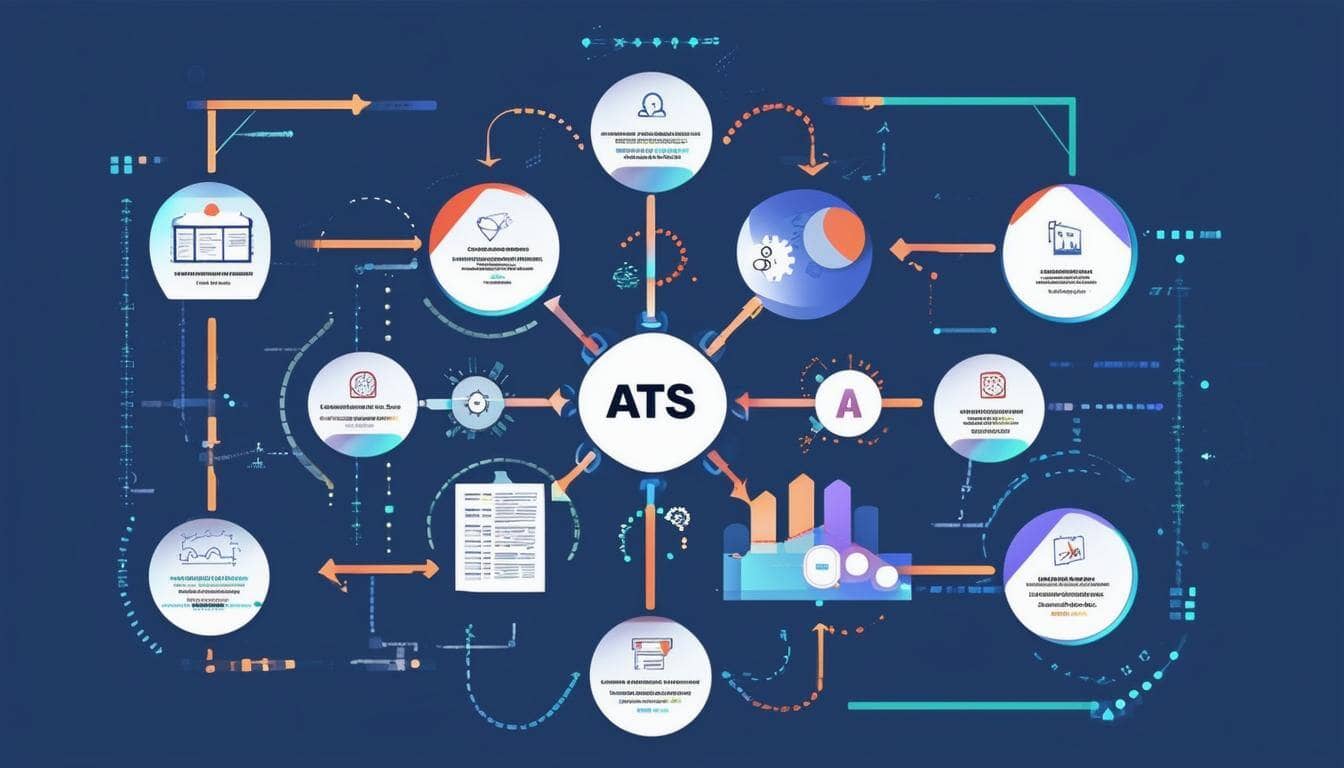
Today, many organizations use a combination of Applicant Tracking Systems (ATS), artificial intelligence (AI), keyword searches, digital application platforms, and human review to manage large numbers of applications.
This does not mean a machine decides everything.
It means your CV may pass through several stages before a recruiter gives it serious attention.
Understanding how these technologies work can give you a major advantage.
“You cannot optimize your job search for a process you do not understand.”
1. What Is an ATS?
An Applicant Tracking System, commonly called an ATS, is software organizations can use to manage recruitment applications.
Depending on the system and employer, an ATS may help with:
Collecting applications
Storing candidate information
Searching CVs
Organizing applicants
Filtering applications
Tracking recruitment stages
Supporting communication with candidates
Helping recruiters identify relevant applicants
Think of an ATS as a digital recruitment management system.
It is not necessarily a robot sitting there saying “yes” or “no” to every candidate.
Different employers use different systems, configurations, and screening processes.
2. Where Does AI Come In?
AI can be incorporated into recruitment technology to support activities such as:
Matching candidate information with job requirements
Identifying relevant skills
Analyzing large amounts of application data
Supporting candidate searches
Automating certain recruitment tasks
Helping recruiters prioritize information
But AI is not magic.
It works with the information available to it.
If your CV does not clearly communicate your relevant skills and experience, technology may have difficulty identifying your suitability.
That is why clarity matters.
3. The Job Description Is Your Starting Point
Many job seekers make the mistake of writing a CV first and thinking about the job later.
Reverse the process.
Start with the job description.
Read it carefully and identify:
Required qualifications
What academic or professional qualifications are required?
Technical skills
What specific skills does the employer want?
Experience
What type and level of experience are expected?
Responsibilities
What will the successful candidate actually do?
Competencies
What personal or professional capabilities are emphasized?
Keywords
What terms appear repeatedly or are central to the position?
Then compare those requirements with your actual background.
4. Keywords Matter—But Keyword Stuffing Does Not
Suppose a vacancy requires:
Project Management
Monitoring and Evaluation
Data Analysis
Stakeholder Engagement
Report Writing
If you genuinely have these skills, your CV should communicate them clearly.
But simply writing:
Project Management | Project Management | Project Management | Data Analysis | Data Analysis
does not make your CV stronger.
That is keyword stuffing.
Instead, demonstrate the keywords through your experience.
For example:
“Coordinated project activities, monitored implementation progress, analyzed project data, and prepared stakeholder reports.”
Now the terminology is connected to real work.
“A keyword becomes powerful when your experience gives it meaning.”
5. Your Job Title Can Influence Searchability
Job titles are important because recruiters may search for candidates using specific terms.
If your official title was Programme Assistant, do not change it to Programme Manager simply because it sounds more impressive.
Instead, accurately describe the responsibilities you performed.
For example:
Programme Assistant – Projects & Partnerships
if that accurately reflects your role and organizational naming conventions.
The rule is simple:
Optimize your CV without falsifying it.
Never invent job titles, qualifications, employers, dates, or responsibilities.
6. Your Professional Summary Matters
Your professional summary should quickly answer:
Who are you?
What do you specialize in?
What experience do you bring?
What value can you offer?
A weak summary might say:
“Hardworking and motivated professional seeking an opportunity to grow.”
A stronger summary communicates professional identity and relevant value.
For example:
“Project and programme professional with experience supporting implementation, stakeholder coordination, reporting, and performance monitoring across development-focused initiatives.”
The second version gives the reader—and potentially recruitment technology—more useful information.
7. Responsibilities Are Not Enough
One of the biggest CV mistakes is listing duties without demonstrating results.
Compare:
Weak:
“Responsible for managing project activities.”
Stronger:
“Coordinated project activities, monitored implementation progress, and supported timely reporting to project stakeholders.”
The stronger statement tells the employer more about what you actually did.
Where possible, include measurable evidence:
Number of people supported
Projects coordinated
Budget managed
Percentage improvement
Revenue generated
Time saved
Locations covered
Reports produced
Partnerships established
Evidence makes your CV more credible.
8. Formatting Still Matters
There is a common misconception that ATS optimization means formatting no longer matters.
It does.
Your CV should be easy for both technology and humans to interpret.
Use:
Clear headings
Consistent formatting
Standard section names
Professional fonts
Logical chronology
Readable bullet points
Consistent dates
Appropriate spacing
Avoid unnecessary complexity.
Your CV should not require the recruiter to solve a puzzle before understanding your experience.
9. Don't Build Your CV for the ATS Alone
This is one of the most important lessons.
Your ultimate goal is not to impress an ATS.
Your goal is to reach the right employer and communicate why you are qualified.
A CV can contain relevant keywords and still be weak if:
It lacks evidence
It is poorly written
It is too generic
Achievements are unclear
Experience is difficult to understand
It contains exaggerated claims
Think about the complete journey:
Job Description → Application → Recruitment Technology → Recruiter Review → Interview
Your CV needs to work throughout that journey.
10. AI Can Help You—If You Use It Correctly
AI can be a powerful career tool.
You can use it to ask questions such as:
“What are the key skills in this job description?”
“Which of my experiences are most relevant to this position?”
“How can I make this achievement clearer?”
“Are there repetitive phrases in my CV?”
“Does my professional summary reflect this position?”
“What keywords appear important in this vacancy?”
But do not simply ask AI to create an entire CV and submit whatever it produces.
AI does not know your career better than you do.
Review everything.
Correct everything.
Verify everything.
Keep your voice and your truth.
11. AI-Generated CVs Have a New Problem: Similarity
As more candidates use AI, many CVs may begin to sound alike.
You may see the same phrases:
Results-driven professional
Strategic thinker
Highly motivated
Excellent communicator
Proven track record
Passionate professional
These phrases are not automatically bad.
The problem occurs when they replace evidence.
Instead of telling employers you are a “results-driven professional,” demonstrate the result.
Instead of saying you have “excellent leadership skills,” show where you led people, projects, teams, or initiatives.
Evidence beats adjectives.
12. Tailoring Your CV Is Becoming Essential
A strong CV is not necessarily a CV that contains everything you have ever done.
It is a CV that presents the most relevant information for the opportunity.
Before applying, ask:
What are the employer's top priorities?
Then make sure your relevant experience is easy to find.
If the position emphasizes financial management, highlight relevant financial experience.
If it emphasizes programme coordination, bring programme coordination experience forward.
If it emphasizes customer service, demonstrate your customer-facing achievements.
You are not changing your history.
You are changing what you emphasize.
13. Don't Believe Every ATS Myth
The internet is full of ATS advice.
Some of it is useful.
Some of it is exaggerated.
For example, it is not accurate to assume that every ATS works in exactly the same way or that every application is automatically rejected because of one formatting choice.
Different systems and employers use different processes.
Instead of chasing every ATS “hack,” focus on fundamentals:
Relevant content + clear structure + accurate keywords + measurable achievements + professional presentation.
That is a much safer strategy.
14. What Happens After You Apply?
The exact process varies by organization, but your application may move through several stages:
Stage 1: Application
You submit your CV and other required documents.
Stage 2: Digital processing
The recruitment system stores and organizes your application.
Stage 3: Search or screening
Recruiters may use filters, searches, matching tools, or other screening methods.
Stage 4: Human review
Recruiters or hiring managers assess relevant candidates.
Stage 5: Assessment
Shortlisted candidates may complete tests, interviews, assignments, or other assessments.
Stage 6: Selection
The employer evaluates candidates and makes a hiring decision.
This is why your CV needs to communicate value from the beginning.
15. The New Job-Seeker Skill: CV Intelligence
In the modern job market, knowing how to write a CV is not enough.
You need to understand CV intelligence.
That means knowing how to:
Read a job description strategically
Identify important requirements
Select relevant keywords
Connect keywords to evidence
Tailor your CV
Use AI responsibly
Understand ATS limitations
Present achievements clearly
Review your CV before submission
This is becoming an important part of modern job-search strategy.
16. Use Technology to Improve Your CV—Not to Hide Weaknesses
Technology can improve presentation.
It cannot compensate for missing qualifications.
It cannot create genuine experience.
It cannot replace professional development.
If a job requires a qualification you do not have, adding the qualification to your CV does not solve the problem.
Instead:
Build the skill. Gain the experience. Earn the qualification. Then present it properly.
Your CV should be a reflection of your professional development—not a work of fiction.
17. Before You Submit: Run the Five-Question Test
Before clicking Apply, ask yourself:
1. Is this CV relevant to the job?
2. Are the most important requirements easy to find?
3. Have I used relevant keywords naturally?
4. Have I demonstrated achievements rather than only responsibilities?
5. Is every piece of information accurate?
If you cannot confidently answer these questions, your CV may need another review.
18. Use Smart CV Checker Before Applying
One of the biggest advantages of modern technology is the ability to review your CV before an employer sees it.
Instead of submitting the same CV repeatedly and wondering why you are not getting results, take time to evaluate it.
Smart CV Checker can help you review your CV and identify areas where your application may need improvement.
Use it as part of your preparation process:
Create → Review → Improve → Tailor → Apply
Do not wait until you receive another rejection to examine your CV.
Check it before you submit.
The Future of Recruitment Is Already Here
AI and ATS technology are changing how organizations manage recruitment.
But the fundamental principles of successful job searching have not disappeared.
Employers still need people with:
Skills.
Experience.
Knowledge.
Integrity.
Problem-solving ability.
Communication skills.
Evidence of performance.
Technology simply changes how easily your value can be discovered.
“Don't try to trick the system. Make your genuine value easier to find.”
The future job seeker will not be the person who knows the most ATS tricks.
It will be the person who understands the recruitment process, uses technology intelligently, presents their experience honestly, and continuously improves their application strategy.
Your CV has entered the age of AI.
The question is no longer:
“Can AI write my CV?”
The better question is:
“Can my CV clearly communicate my real value in a technology-driven recruitment process?”
If the answer is not yet yes, improve it before your next application.
Use Smart CV Checker to review your CV, identify opportunities for improvement, and make your next application stronger.
Your experience is your story. Your CV is how you make that story discoverable.
More from the journal
Related reading

10 African Careers That Could Grow Rapidly Before 2030
The Certificate Economy: Why More Qualifications Don't Always Mean a Better Career