Article
Read the full piece
Discover your values. Clarify your direction. Start living with purpose.
Have you ever felt busy but unsure whether you are moving in the right direction? Have you ever made a decision to please others, only to realise later that it did not reflect who you truly are?
In a world filled with expectations, comparisons, and endless advice, it is easy to lose sight of your own direction. You may know what others expect from you, yet struggle to identify what truly matters to you.
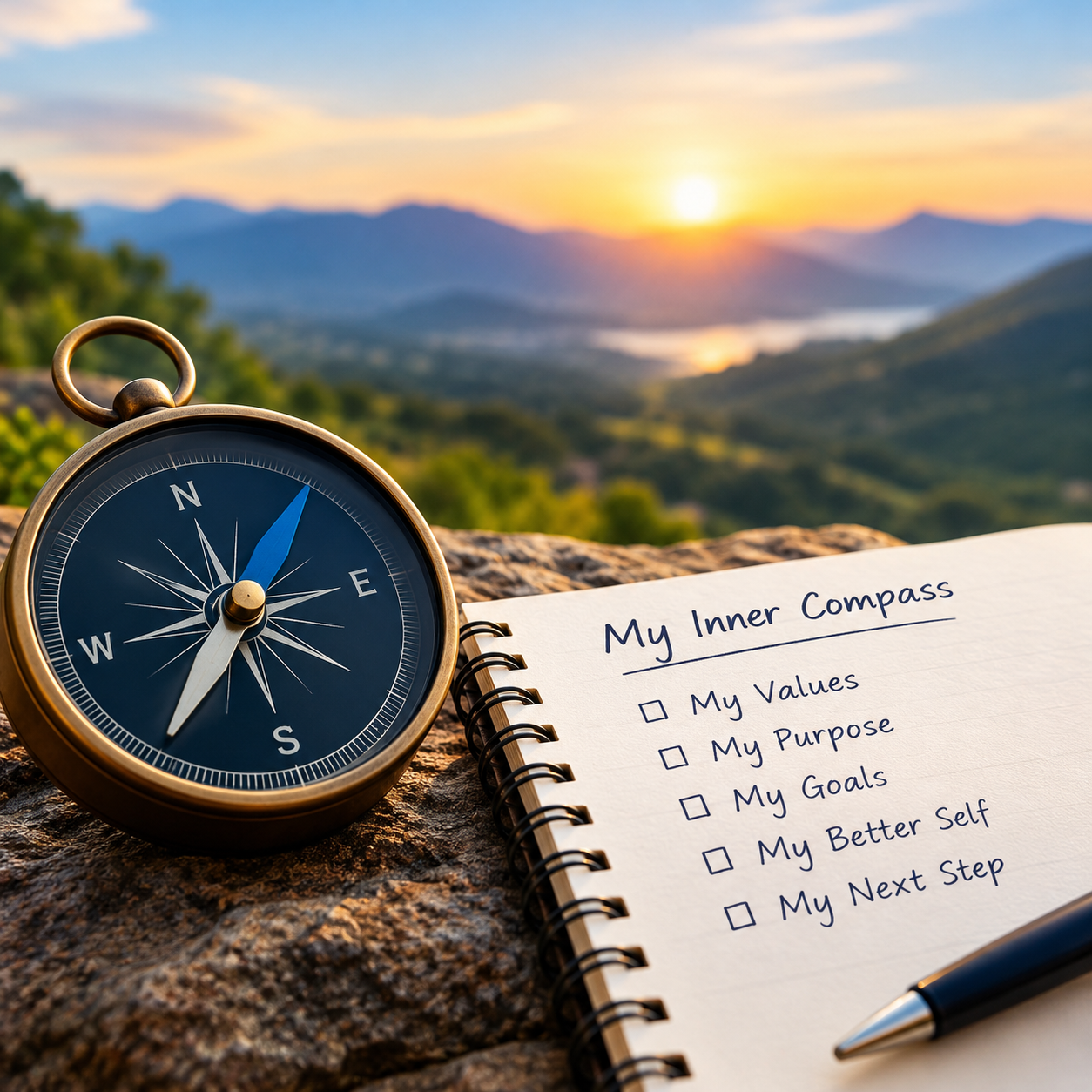
The solution begins with your inner compass.
What Is a Personal Inner Compass?
Your personal inner compass is the collection of values, beliefs, principles, and aspirations that guide your decisions and shape your behaviour. It helps you distinguish between what looks good to others and what feels right according to your deepest convictions.
Just as a physical compass helps a traveller navigate unfamiliar territory, your inner compass helps you navigate life's opportunities, challenges, relationships, and difficult choices.
It does not promise a life without uncertainty. Instead, it gives you a foundation for making thoughtful decisions, staying grounded during difficult moments, and pursuing goals that align with who you want to become.
Why You Need to Discover Your Inner Compass
Without a clear sense of direction, you may find yourself following trends, accepting opportunities that conflict with your principles, or measuring success entirely by other people's standards.
Discovering your inner compass can help you:
Make intentional decisions: Choose paths that reflect your values rather than acting solely out of pressure or fear.
Build authentic relationships: Connect with people who respect your principles and support your growth.
Develop resilience: Remain grounded when faced with rejection, disappointment, or unexpected change.
Define personal success: Establish goals that are meaningful to you, not merely impressive to others.
Live with greater purpose: Direct your time, energy, and abilities towards what matters most.
Your Guided Reflection Workbook: Finding Your Direction
Take a few quiet minutes, find a notebook, and answer the following questions honestly. There are no perfect answers. The goal is not to impress anyone but to understand yourself better.
1. Discover Your Core Values
Your values are the principles you want to guide your life. They might include honesty, faith, compassion, courage, responsibility, freedom, learning, or service.
Reflect:
What three principles matter most to me?
When have I felt proud of how I handled a situation?
What behaviour would I refuse to compromise, even under pressure?
Your action: Write down your five most important values. Choose one and identify a practical way to demonstrate it this week.
2. Identify What Gives Your Life Meaning
Purpose is not always discovered in one extraordinary moment. Sometimes, it emerges through the people you help, the problems you solve, and the small actions you take consistently.
Reflect:
What activities make me feel fulfilled and energised?
What challenges in my community or society deeply concern me?
What positive difference would I like to make in other people's lives?
Your action: Write one sentence describing the kind of impact you want your life to have.
3. Recognise the Influences Shaping Your Decisions
Family expectations, friendships, social media, culture, and fear of failure can all influence your choices. Some influences strengthen you; others may pull you away from your values.
Reflect:
Am I making important decisions because I believe in them or because I fear disappointing others?
Which voices encourage me to grow, and which make me doubt myself?
Where do I need to establish healthier boundaries?
Your action: Identify one decision you need to reconsider and ask whether it aligns with your values and long-term goals.
4. Define the Person You Want to Become
Your future is shaped not only by what you achieve but also by the character you develop along the way.
Reflect:
What qualities do I want people to experience when they interact with me?
What habits are helping me become that person?
What behaviours or attitudes must I change?
Your action: Choose one quality you want to develop and practise it intentionally over the next seven days.
5. Turn Your Values into Daily Decisions
Knowing your values is important, but living them is what gives them power. Your inner compass becomes useful when it influences your everyday choices.
Reflect:
What is one action I can take today that reflects my values?
Which commitment have I been postponing?
What small step can I take towards a goal that genuinely matters to me?
Your action: Set one meaningful goal for the next 30 days. Break it into small, realistic steps and review your progress every week.
Create Your Personal Inner Compass Statement
Now bring your reflections together into a simple personal statement that reminds you of the direction you want your life to take.
Complete the following sentences:
I value: The principles I want to live by are…
I stand for: I believe in…
I aspire to: I want to become a person who…
I contribute by: I want to make a difference through…
I commit to: One action I will consistently take is…
Use your answers to create a statement you can revisit whenever you feel uncertain, distracted, or discouraged.
Your Journey Begins with One Honest Step
Creating your personal inner compass is not a one-time exercise. As you grow, encounter new experiences, and learn from your mistakes, your understanding of yourself may deepen. What matters is remaining willing to reflect, learn, and realign your actions with your principles.
You do not need to have your entire life figured out today. You only need the courage to ask honest questions, the wisdom to recognise what matters, and the discipline to take the next meaningful step.
Remember: You cannot always control the direction of the wind, but you can learn to navigate with a clear sense of direction.
Your inner compass is yours to discover. Take time to listen to it, trust the values that genuinely define you, and build a life that reflects the person you are becoming.
Pause. Reflect. Realign. Move forward with purpose.
More from the journal
Related reading

Align Your Personal Choices With your Plans
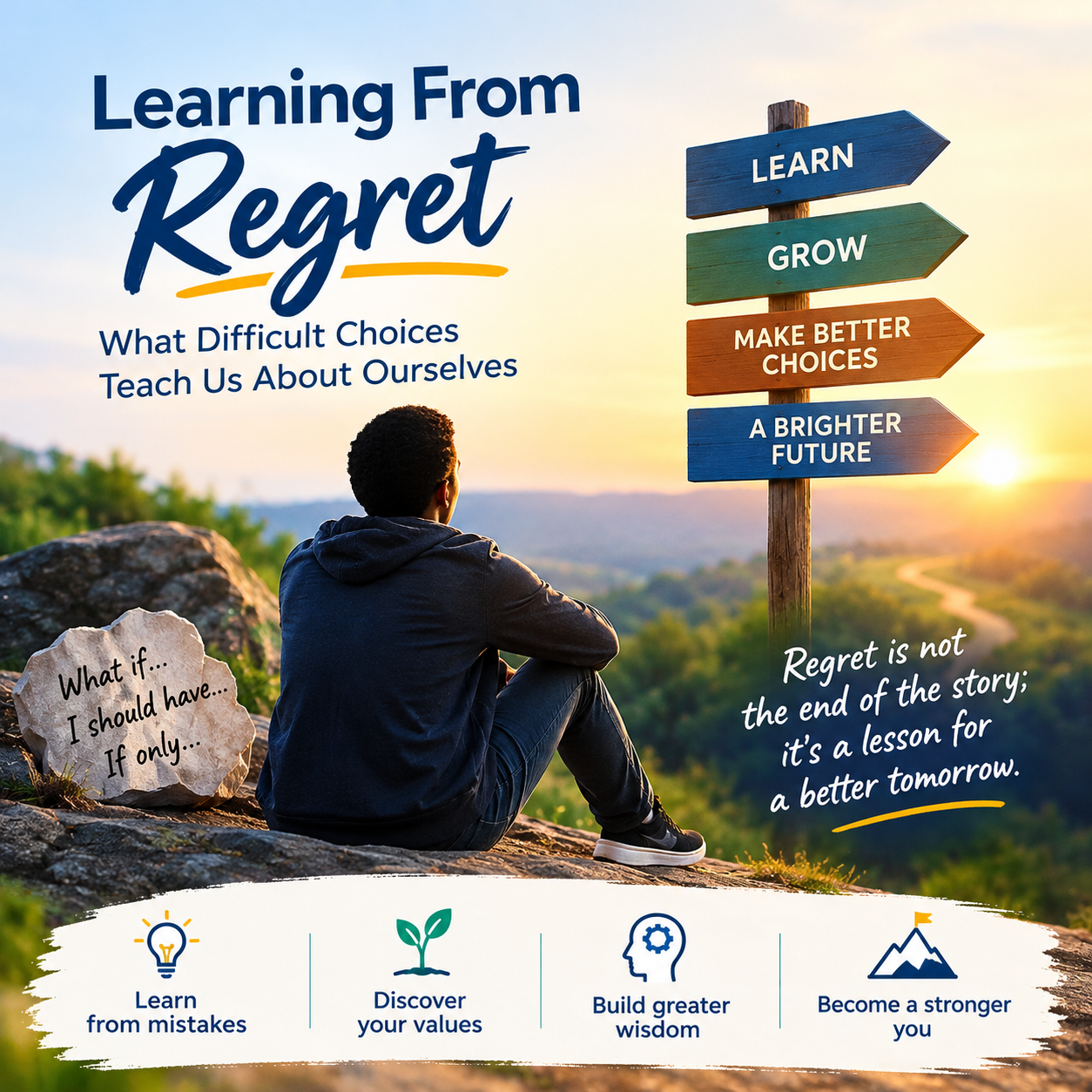
Learning From Regret: What Difficult Choices Teach Us About Ourselves