Article
Read the full piece
The Digital Job Market: Why Your CV Needs to Evolve
The job market has gone digital.
Today, your next career opportunity may begin with an online job advert, a digital application form, an uploaded CV, an Applicant Tracking System (ATS), a recruiter search, or even an AI-supported recruitment tool.
This changes one important thing:
Your CV can no longer be treated as just a document.
It is part of your digital job-search strategy.
A CV that worked five or ten years ago may not be the best CV for today's recruitment environment.
The question is:
“Is your CV evolving as fast as the job market?”
1. The Way Employers Find Candidates Is Changing
Recruitment is increasingly supported by digital tools.
Employers may use online platforms to:
Advertise vacancies
Receive applications
Store candidate information
Search CV databases
Identify relevant skills
Communicate with applicants
Track recruitment stages
Support candidate screening
For job seekers, this means your CV needs to be clear, relevant, searchable, and professionally presented.
Getting your CV in front of an employer is no longer only about physically handing over a document.
Your CV must work in a digital environment.
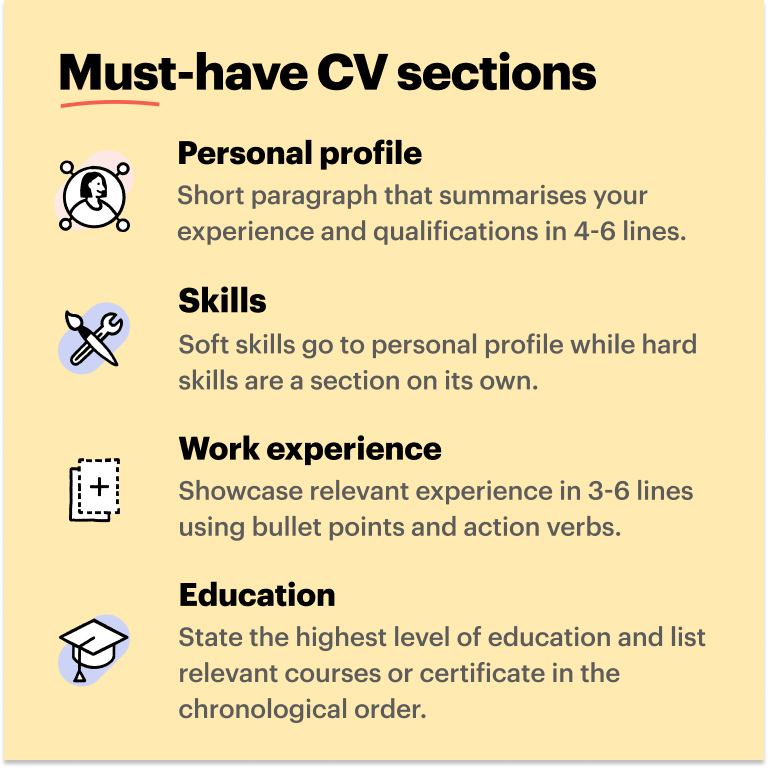
2. Your CV Is Now More Than a Piece of Paper
Think of your CV as your professional digital introduction.
Before you meet a recruiter, your CV may be the first thing they use to understand:
Who you are
What you do
Where you have worked
What skills you possess
What you have achieved
Whether you may be relevant to the position
That makes your CV an important part of your professional brand.
“Your CV is not simply a record of your past. It is a positioning tool for your next opportunity.”
3. Generic CVs Are Losing Their Advantage
One CV sent to every employer may seem convenient.
But different jobs require different priorities.
A Project Officer position may emphasize:
Project coordination
Monitoring and evaluation
Reporting
Stakeholder engagement
A Finance Officer position may emphasize:
Financial reporting
Budget management
Accounting
Compliance
A Human Resources position may emphasize:
Recruitment
Employee relations
HR administration
Performance management
Your career history may remain the same.
But your CV emphasis should change according to the opportunity.
4. Job Descriptions Have Become Your CV's Roadmap
Before applying, don't just read the job description.
Study it.
Look for:
Qualifications
What education, certifications, or professional credentials are required?
Technical skills
What technical capabilities does the employer want?
Responsibilities
What will the successful candidate actually be expected to do?
Competencies
What behaviors and professional qualities are emphasized?
Keywords
Which terms appear repeatedly or are central to the role?
Then compare these requirements with your own experience.
This helps you determine what should receive greater emphasis in your CV.
5. Keywords Are Now Part of Modern CV Strategy
Digital recruitment systems and recruiters may search for specific terms.
If a vacancy requires procurement, contract management, supplier evaluation, and compliance, and you genuinely have those skills, make sure your CV communicates them clearly.
But don't simply copy the job description.
Use relevant terminology naturally within:
Your professional summary
Skills section
Work experience
Achievement statements
Professional certifications
For example:
Instead of:
“Handled suppliers.”
Consider:
“Managed supplier coordination, procurement documentation, and compliance requirements to support timely service delivery.”
The second version provides greater context.
6. Your Achievements Need to Become More Visible
A digital CV should not be a long list of responsibilities.
Employers want to understand what you actually contributed.
Compare:
“Responsible for training staff.”
with:
“Coordinated staff training activities, supporting employee development and improved understanding of operational procedures.”
The second statement communicates action and contribution.
Where possible, add measurable evidence.
For example:
Number of employees trained
Number of projects supported
Percentage improvement
Revenue generated
Costs reduced
Customers served
Reports produced
Processes improved
“Responsibilities tell employers what you were assigned. Achievements show them what you contributed.”
7. Your CV Must Be Easy to Read
Digital does not mean complicated.
In fact, clarity becomes even more important.
Use:
Clear section headings
Consistent formatting
Professional fonts
Short, focused bullet points
Logical employment dates
Standard terminology
Consistent spacing
Avoid unnecessary design elements that make important information difficult to locate.
Your CV should look professional without becoming distracting.
8. AI Is Changing How Candidates Prepare Their CVs
Artificial Intelligence can now help job seekers:
Analyze job descriptions
Improve wording
Identify relevant skills
Generate ideas
Correct grammar
Suggest improvements
Compare CV content with job requirements
This is a major opportunity.
But AI should be treated as an assistant—not the owner of your career story.
Never allow AI to invent:
Qualifications
Employers
Job titles
Employment dates
Achievements
Skills you do not possess
Your CV must remain truthful.
Use AI to improve your presentation—not to manufacture your experience.
9. Recruiters Are Becoming More Data-Driven
Recruiters increasingly have access to large amounts of candidate information.
This means vague statements may become less effective.
Instead of:
“Good communication skills.”
Show communication in context:
“Prepared reports and delivered project updates to internal and external stakeholders.”
Instead of:
“Strong leadership skills.”
Show leadership:
“Coordinated a team of staff to deliver project activities within agreed timelines.”
Evidence creates credibility.
10. Your Online Presence Can Support Your CV
Your CV does not exist in isolation.
Depending on the profession and opportunity, recruiters may also encounter your:
LinkedIn profile
Professional portfolio
Published work
Professional certifications
Digital projects
Professional networking activity
This means your professional information should be consistent.
If your CV says one thing and your professional online profile says something completely different, questions may arise.
Build a professional digital identity that supports your career goals.
11. Digital Recruitment Makes Accuracy More Important
When information is stored digitally, inconsistencies can become easier to identify.
Make sure your CV contains:
Correct employment dates
Accurate job titles
Correct qualifications
Consistent organization names
Genuine achievements
Accurate contact information
Never exaggerate your experience simply to appear more competitive.
“A stronger CV is not a more exaggerated CV. It is a more accurately positioned CV.”
12. Your CV Needs to Work for Both Technology and Humans
This is one of the most important principles of the digital job market.
Your CV needs to be:
Technology-friendly
It should contain clear, relevant, searchable information.
Recruiter-friendly
It should communicate your value quickly.
Human-friendly
It should be easy to understand and supported by credible evidence.
Do not optimize your CV for technology while forgetting the person who ultimately needs to understand it.
13. The Digital Job Market Rewards Adaptability
The strongest job seekers are not necessarily those who have the most qualifications.
They are often those who know how to adapt their presentation to changing recruitment environments.
That means learning how to:
Read digital job adverts
Tailor CVs
Use relevant keywords
Demonstrate achievements
Use AI responsibly
Understand ATS systems
Build a professional online presence
Review applications before submitting them
Job searching itself has become a digital skill.
14. Don't Apply More. Apply Smarter.
Sending 100 identical applications may feel productive.
But productivity is not measured only by the number of applications you submit.
Ask:
Did I apply for roles that match my profile?
Did I tailor my CV?
Did I address the employer's priorities?
Did I demonstrate relevant achievements?
Did I review my application before submitting it?
A smaller number of well-prepared applications can be more strategic than sending the same generic CV everywhere.
15. Review Your CV Before You Click “Apply”
One of the biggest mistakes job seekers make is treating CV writing as the final step.
It should not be.
Reviewing is part of CV writing.
Before submitting, check:
Relevance
Does the CV match the position?
Keywords
Have you included relevant terminology naturally?
Achievements
Have you demonstrated your contribution?
Structure
Can someone quickly find your most important information?
Accuracy
Is everything truthful and up to date?
Presentation
Does the CV look professional and consistent?
16. Use Smart CV Checker
Modern technology should work for job seekers as well as employers.
Before submitting your next application, use Smart CV Checker to review your CV and identify areas where you may be able to improve.
It can form part of a simple process:
CREATE → CHECK → IMPROVE → TAILOR → APPLY
Don't wait for another rejection before asking whether your CV could be stronger.
Check it before you submit.
17. The CV of the Future Will Be More Strategic
The future CV will not necessarily be longer.
It will be smarter.
It will communicate:
Professional Identity
Who are you?
Relevant Skills
What can you do?
Experience
Where have you applied those skills?
Achievements
What difference have you made?
Keywords
What relevant expertise do you bring?
Career Direction
What opportunities are you targeting?
This is what makes a CV powerful in a competitive digital job market.
Your CV Needs to Evolve
The digital job market is changing how employers advertise, search, organize, and evaluate applications.
You cannot control every part of the recruitment process.
But you can control how effectively you present your value.
Don't create a CV simply because you need a document to upload.
Create a CV that is:
Relevant.
Clear.
Evidence-based.
Searchable.
Professional.
Authentic.
And most importantly, keep improving it.
“The job market evolves. Recruitment evolves. Your CV must evolve too.”
The question is no longer:
“Do I have a CV?”
The better question is:
“Is my CV ready for the digital job market?”
Before your next application, review your CV, compare it with the job description, strengthen your evidence, and use technology intelligently.
Check your CV with Smart CV Checker and make your next application stronger.
Smart CV Checker — Start Your CV Review
The digital job market is already here. Make sure your CV is ready for it.
More from the journal
Related reading

10 African Careers That Could Grow Rapidly Before 2030
The Certificate Economy: Why More Qualifications Don't Always Mean a Better Career