Article
Read the full piece
Everyone carries a story.
Sometimes it sounds like:
“I've always been unlucky.”
“I'm not confident.”
“People eventually leave.”
“I am not good enough.”
“I have to be strong.”
“Success isn't for people like me.”
These sentences may feel like facts.
But often, they are interpretations built from experiences.
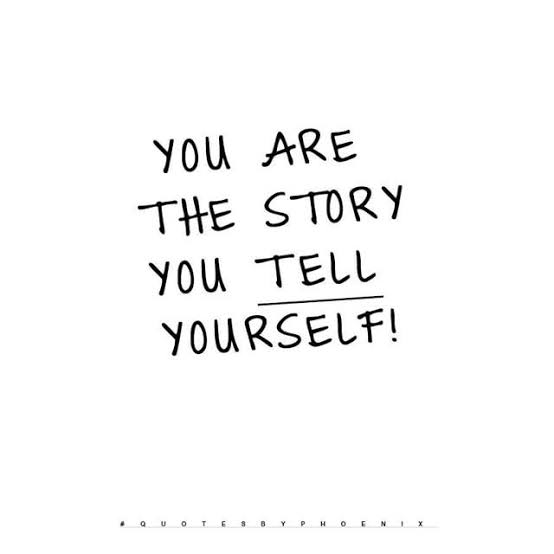
“Sometimes the story holding you back is the story you keep repeating.”
How Stories Become Identities
Imagine someone who failed an important examination.
One interpretation is:
“I failed that examination.”
Another is:
“I am a failure.”
The first describes an event.
The second transforms an event into an identity.
That distinction matters.
A mistake is something you experienced.
An identity is a conclusion about who you are.
The Problem With Permanent Language
Watch for words like:
always
never
everyone
nobody
impossible
that's just who I am
These words can turn temporary experiences into permanent identities.
Consider:
“I always ruin relationships.”
What evidence supports that?
What evidence contradicts it?
What relationships have worked?
What behaviors contributed to the difficult ones?
What might you learn?
Self-awareness asks better questions before accepting a story as truth.
Where Do Your Stories Come From?
Personal narratives can be influenced by:
family messages
cultural expectations
education
friendships
successes
failures
social comparison
trauma and adversity
economic circumstances
workplace experiences
online environments
Culture also shapes aspects of cognition, emotion, motivation, and how people understand themselves.
This is especially important for a global audience.
There is no single universal definition of success, independence, family, adulthood, or purpose.
Your story may contain ideas inherited from your environment.
That doesn't automatically make them wrong.
But it makes them worth examining.
The Story Audit
Write one sentence that describes something you believe about yourself.
For example:
“I am bad at speaking in public.”
Then ask:
1. When did I start believing this?
2. What experiences contributed to it?
3. Is it always true?
4. What evidence contradicts it?
5. What would a more accurate version sound like?
Perhaps:
“Public speaking is difficult for me right now, but I can improve with practice.”
That's not fake positivity.
It is a more flexible interpretation.
More from the journal