Article
Read the full piece
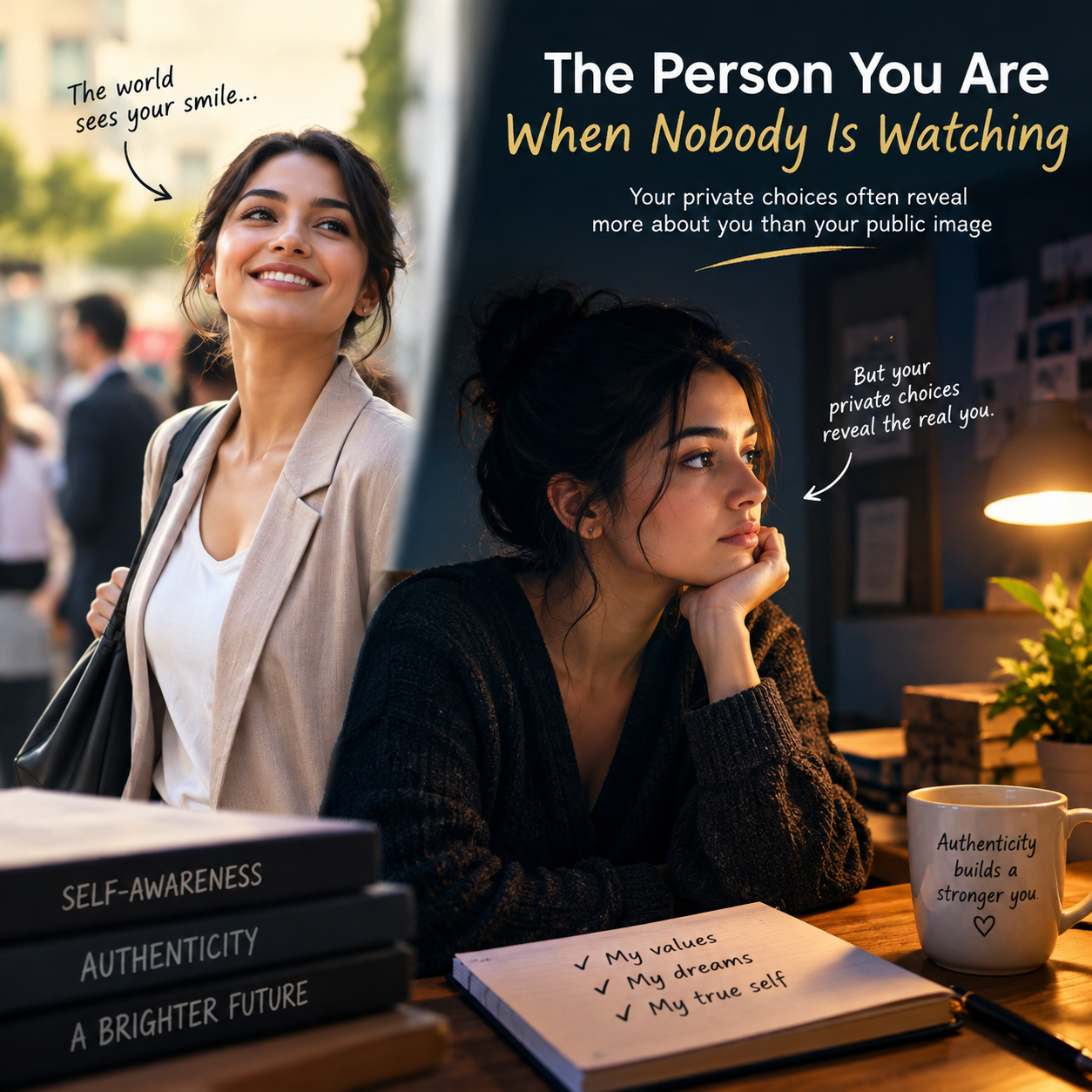
Who are you when nobody is watching?
Not the version of you that appears on social media. Not the version who performs well at work. Not the version who wants to impress family, friends, colleagues, or strangers.
Who are you when the room is empty?
That question can be uncomfortable because public identity and private behavior do not always match.
You may appear confident while privately doubting yourself. You may tell others that you value health while repeatedly ignoring your own well-being. You may talk about kindness but notice that your private thoughts toward certain people are harsh.
None of this makes you uniquely flawed. It makes you human.
Self-awareness begins when we become willing to observe ourselves honestly without immediately defending, condemning, or glorifying what we discover.
“Your private choices often reveal more about you than your public image.”
Why Your Private Behavior Matters
Self-awareness is not simply knowing facts about yourself.
It involves noticing your internal states, patterns, reactions, preferences, strengths, limitations, and the effects your behavior has on your life and relationships. Psychological discussions of emotional intelligence commonly place recognizing one's emotions and accurately assessing one's strengths and limitations within self-awareness.
Your private behavior can reveal patterns that your public identity hides.
For example:
What do you do when you are bored?
How do you respond when nobody praises you?
What happens when you make a mistake?
How do you treat someone who cannot benefit you?
What do you tell yourself after failure?
What habits appear when there are no consequences?
These questions can tell you more about your current patterns than a personality label ever could.
More from the journal