Article
Read the full piece
Have you ever promised yourself:
“Never again.”
And then somehow found yourself in the same situation months later?
The same argument.
The same procrastination.
The same unhealthy relationship pattern.
The same financial mistake.
The same reaction.
The same regret.
It can feel like you're fighting yourself.
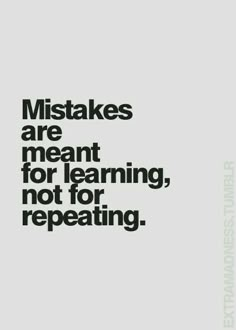
But repeated behavior often has a pattern.
“A repeated pattern is often an unanswered question wearing a different disguise.”
Mistakes Are Not Always Random
Imagine someone who repeatedly delays important work.
They might call themselves lazy.
But perhaps the actual sequence is:
Important task → fear of doing it badly → avoidance → temporary relief → deadline pressure → rushed work → disappointment → promise to improve → repeat.
The behavior isn't random.
It follows a cycle.
Find the Trigger
Every recurring pattern has something that activates it.
Ask:
What usually happens immediately before I do this?
Maybe it's:
criticism
boredom
uncertainty
loneliness
stress
rejection
fatigue
feeling overwhelmed
Once you identify the trigger, you have a better starting point.
Find the Reward
This is one of the most powerful questions:
What does this behavior give me immediately?
Even unhealthy patterns often provide short-term relief.
Avoidance can provide temporary relief from anxiety.
People-pleasing can provide temporary approval.
Anger can create a temporary sense of power.
Overworking can temporarily silence feelings of inadequacy.
The short-term reward can help explain why the behavior continues even when the long-term consequences are negative.
Map Your Pattern
Write:
Trigger → Thought → Emotion → Behavior → Immediate Reward → Long-Term Cost
Example:
Trigger: Someone criticizes my work.
Thought: “They think I'm incompetent.”
Emotion: Shame.
Behavior: Become defensive.
Immediate reward: I feel protected.
Long-term cost: The relationship becomes tense.
This map turns a vague problem into something observable.
Change One Link
You don't always need to transform the entire pattern immediately.
Change one link.
Instead of reacting instantly to criticism, pause.
Instead of avoiding the task, work for ten minutes.
Instead of automatically saying yes, say:
“Let me think about it.”
Small changes create new experiences.
New experiences create new evidence.
New evidence can support new habits.
Practical Exercise: The Three-Time Rule
Choose one behavior you repeat.
Write down the last three times it happened.
For each occurrence, record:
What happened before?
What did I think?
What did I feel?
What did I do?
What happened afterward?
Look for similarities.
Your pattern may become surprisingly visible.
More from the journal