
About the opportunity
What this programme is offering
The funding opportunity is open globally and is particularly interested in projects serving communities in the Global South, rural areas and peri-urban communities where access to formal financial services remains limited.
Applications are being reviewed on a rolling basis, with the current application window running through 11 November 2026.
What Are the Interledger Local Impact Mini-Grants?
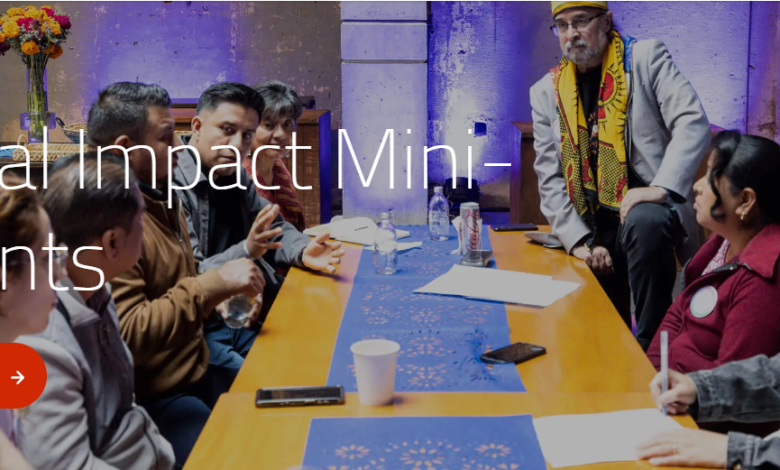
The Local Impact Mini-Grants are designed to put small-scale funding directly into the hands of people and organizations working within their communities to address barriers to digital financial access.
The Interledger Foundation recognizes that meaningful financial inclusion initiatives can often begin at the local level, including within neighborhoods, villages, cooperatives, community groups and local markets.
Rather than focusing on large institutional programmes, the mini-grants are intended to support practical community-led activities that create opportunities for people to learn about, experiment with and engage in open payments and digital financial technologies.
For grassroots organizations and individual practitioners that may not have access to large grants, the funding can provide resources to organize targeted activities and test locally relevant ideas.
Eligible applicants can include:
Individual practitioners and community leaders
Registered or unregistered community organizations
Nonprofit organizations
Cooperatives
Civil society groups
Local fintech startups
Social enterprises
Applicants should have a concrete project plan focused on the programme’s areas of interest.
The Foundation is particularly interested in applicants who have direct knowledge of the communities they intend to serve.
This makes the opportunity potentially valuable for grassroots leaders who understand local financial access challenges and are already connected to the communities where their projects will take place.
What Types of Projects Are Supported?
The Local Impact Mini-Grants can support a range of community-led activities related to open payments and digital financial access.
Potential activities include:
Community workshops
Local meetups
Hackdays and innovation events
Community conversations
Research
Storytelling
Educational content
Learning activities
Local ecosystem-building initiatives
Projects should have a clear connection to open payments, digital financial access, financial inclusion, open-source innovation or digital public infrastructure.
Applicants should demonstrate how their proposed activity responds to a real challenge or opportunity within their community.
Priority for Global South and Underserved Communities
One of the notable features of the 2026 funding cycle is the emphasis on communities that are often underserved by existing financial systems.
Projects serving Global South communities, rural populations and peri-urban areas with limited access to formal financial services are identified as a priority.
This could make the opportunity particularly relevant to community organizations, technology innovators, researchers and social entrepreneurs working in Africa, Asia, Latin America and other underserved markets.
Applicants should clearly explain the local context of their project and the barriers faced by the communities they intend to support.
What Can the Grant Funding Be Used For?
The funding is intended to support direct project activities.
Applicants should therefore present a specific project with defined activities, objectives and expected outcomes rather than requesting general financial support for their organization.
The Foundation’s focus is on activities that bring communities together around open payments and digital financial access, create opportunities for learning and experimentation, and generate knowledge that can potentially be shared with the broader Interledger community.
Applicants should carefully review the official grant guidance to determine whether their proposed expenses are eligible.
What Is Not Covered?
The funding cannot be used for general operating expenses or capital expenditures.
Applicants should therefore distinguish between costs directly connected to the proposed project and broader organizational expenses.
The application period opened on 6 July 2026, and proposals are being reviewed on a rolling basis until 11 November 2026.
Applicants are encouraged to submit early because the Foundation indicates that early submission can improve the chances of receiving an award within the current funding cycle.
Before applying, prospective applicants should review the official programme information, eligibility criteria and factsheet and ensure that their proposed project meets the funding requirements.
A strong application should clearly communicate:
The community or population being served
The financial access challenge being addressed
The proposed activities
Why the project is locally relevant
How the funding will be used
Expected results and community benefits
How the project can contribute to broader learning around open payments
How to apply