Article
Read the full piece
What if the answer you are looking for is hiding inside the question you have never thought to ask?
Look around.
A crowded classroom.
A slow business process.
A broken system.
A frustrating daily routine.
A problem everyone complains about.
Most people see the problem.
Creative people start wondering what else might be possible.
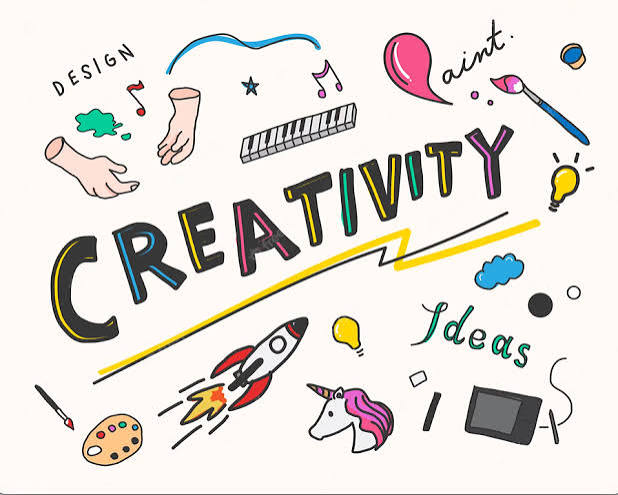
Creativity is not simply painting, writing music, designing graphics, or producing beautiful art.
Creativity is the ability to see possibilities where others see limitations, connect ideas in unexpected ways, ask better questions, and experiment with new approaches.
And it belongs to you.
“I'M NOT CREATIVE.”
You've probably heard someone say it.
Maybe you've even said it yourself.
But creativity isn't an exclusive gift handed to a lucky few at birth.
It can be strengthened.
Curiosity exercises it. Observation feeds it. Experimentation develops it. Practice sharpens it.
You don't have to wait for inspiration to magically arrive.
Sometimes creativity begins with simply becoming willing to look again.
You may not need a more creative mind. You may need permission to use the one you already have differently.
1. CREATIVITY BEGINS WITH CURIOSITY
Creative thinking often starts with three simple questions:
Why?
What if?
What else?
Why do we do things this way?
What if there were another approach?
What else could solve this problem?
A student who asks different questions may discover a better way to understand a difficult subject.
An entrepreneur may notice an unmet customer need.
A teacher may find a new way to explain an old concept.
A leader may discover that the problem isn't the people—but the system surrounding them.
Curiosity opens doors that routine keeps locked.
So the next time you encounter something that frustrates you, don't immediately accept it.
Ask a better question.
2. CREATIVITY NEEDS ROOM TO FAIL
What stops many people from creating?
Not a lack of ideas.
Fear of being wrong.
They don't share the idea because someone might laugh.
They don't try because the first attempt might fail.
They wait until everything is perfect.
But creativity rarely arrives fully formed.
The first version may be awkward.
The first business idea may need changing.
The first design may look terrible.
The first solution may not work.
That's okay.
An imperfect experiment can teach you more than a perfect idea that never leaves your head.
Don't treat every failed attempt as a verdict.
Sometimes it is simply data.
3. CREATIVITY CONNECTS WHAT ALREADY EXISTS
You don't always have to invent something completely new.
Sometimes you simply need to connect existing things differently.
A skill from one field can solve a problem in another.
Technology can combine with education.
Business can combine with community needs.
An old idea can meet a new environment.
Two ordinary concepts can become something surprisingly useful when connected from a different angle.
Think about your own experiences.
What do you know from one area of your life that could solve a problem in another?
Creativity often lives in the connection.
4. CREATIVITY NEEDS ACTION
An idea can be brilliant and still accomplish nothing.
Why?
Because it stayed in someone's head.
Creativity becomes valuable when an idea is tested, developed, shared, improved, and applied.
A notebook full of ideas is useful.
A prototype is better.
A conversation is useful.
A tested solution is better.
A vision is powerful.
But movement gives vision a chance to become reality.
Don't wait for the perfect idea.
Start with an interesting one.
Test it.
Learn.
Adjust.
Try again.
A DIFFERENT WAY OF SEEING
Consider a student who notices that classmates regularly miss important information because announcements are scattered across different platforms.
Everyone complains about it.
One student asks a different question:
“What if we created one simple place where everyone could find the information?”
She creates a basic shared resource, organizes the information, and asks classmates to test it.
It isn't perfect.
But it works.
What changed?
The problem didn't suddenly disappear.
The question changed.
And sometimes changing the question is the first creative breakthrough.
HOW CREATIVE ARE YOU?
Take a moment and answer honestly:
Do I ask questions about things others simply accept?
Do I experiment with different ways of doing familiar tasks?
Can I consider an idea that challenges something I strongly believe?
Do I capture my ideas before judging them?
Do I turn at least some of my ideas into experiments?
If most of your answers are “no,” don't worry.
That's not a label.
It's an invitation.
Choose one area of your life where you could start looking differently.
THE 15-MINUTE CREATIVITY CHALLENGE
You don't need a workshop.
You don't need expensive equipment.
You need 15 minutes.
5 MINUTES — OBSERVE
Look around you.
Identify one problem, inconvenience, wasted resource, unmet need, or frustrating routine.
Don't solve it yet.
Just notice it.
5 MINUTES — IMAGINE
Write down at least five possible solutions.
Don't judge them.
Don't ask whether they're realistic yet.
Let your imagination move.
Quantity first. Judgment later.
5 MINUTES — CREATE
Choose one idea.
Take the smallest possible step toward testing it.
Sketch it.
Build a rough version.
Ask someone about it.
Create a sample.
Try the new process.
Make the idea visible.
LOOK AGAIN
Creativity isn't reserved for artists.
It belongs in classrooms, offices, businesses, laboratories, homes, communities, and boardrooms.
It belongs wherever someone is willing to ask:
“Is there another way?”
The world doesn't always need someone with more information.
Sometimes it needs someone willing to see what everyone else has stopped noticing.
So today, don't simply accept a problem.
Question it. Reimagine it. Experiment with it.
Don't wait to feel creative.
Start looking differently.
Then take one small idea and give it a chance to exist.
One final question:
What could you create if you stopped waiting to feel creative—and simply started creating?
More from the journal
Related reading
Be Afraid To Lose Yourself To Anything
The Learning Mindset: Never Stop Becoming