Article
Read the full piece
What if your life is moving forward—but the direction was never truly chosen by you?
You can be busy and still be lost.
You can achieve goals, earn money, gain qualifications, build relationships and collect opportunities—and still wake up wondering, “Is this actually the life I want?”
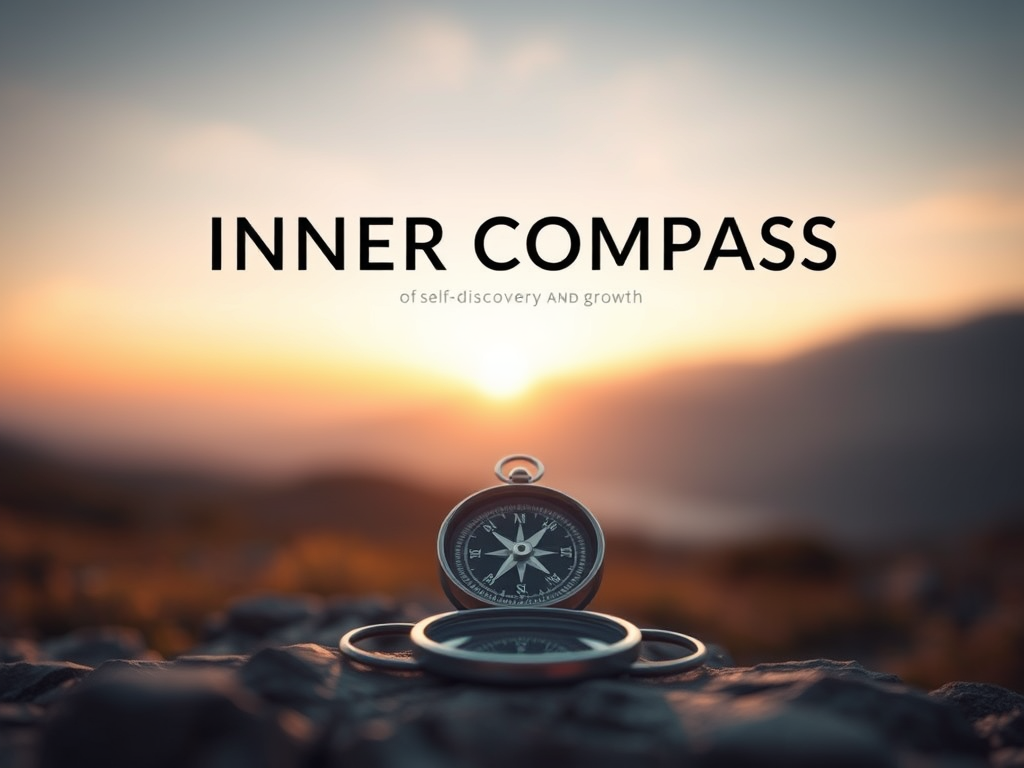
A compass cannot walk the journey for you.
It simply tells you which direction you are facing.
Life is much the same.
Your inner compass is the combination of your values, convictions, purpose, self-awareness, wisdom and principles that helps you decide where to go—and where not to go.
Without it, the loudest voice around you can easily become your direction.
WHO IS CHOOSING YOUR DIRECTION?
Think about your last major decision.
Did you choose it because it aligned with your values?
Or because your family expected it?
Because your friends were doing it?
Because social media made it look successful?
Because you were afraid of missing out?
Because saying no would disappoint someone?
There is a difference between choosing your life and simply responding to the pressures around you.
A life directed by purpose asks:
“What matters to me, and what kind of person am I becoming?”
A life directed by pressure asks:
“What will make everyone else happy with me?”
Those two questions can lead to completely different destinations.
NOT EVERY OPEN DOOR IS YOUR DESTINATION
Consider someone who appears successful.
They have the impressive job, the qualifications, the income and the lifestyle others admire.
Yet privately, they feel exhausted and disconnected.
For years, they followed a career because it was considered respectable. Their parents encouraged it. Their peers admired it. Society rewarded it.
They achieved what they were told to pursue.
But somewhere along the way, they stopped asking what they actually valued.
A full calendar does not necessarily mean a meaningful direction.
Success becomes complicated when you arrive somewhere you never consciously chose to go.
4 SIGNS YOU MAY HAVE LOST YOUR INNER DIRECTION
1. You Constantly Compare Your Journey
Someone else's progress determines whether you feel successful.
Their promotion makes you question your career.
Their business makes you question yours.
Their relationship makes you question your life.
Comparison can turn another person's destination into your unwanted compass.
2. Approval Influences Your Biggest Decisions
You find yourself asking, “What will people think?” before asking, “What do I believe is right for me?”
Approval becomes the invisible price you pay for making choices.
3. Achievement Doesn't Feel Meaningful
You accomplish something you worked hard for—and the satisfaction disappears almost immediately.
You move to the next goal without stopping to ask whether the goals themselves still matter.
4. You Struggle to Say No
Every opportunity becomes something you feel obligated to accept.
Every request becomes your responsibility.
Every disappointment from someone else feels like your failure.
But sometimes saying no is not rejection.
It is direction.
A clear “no” can protect a meaningful “yes.”
STOP. LOOK WITHIN. CHECK YOUR DIRECTION.
Find somewhere quiet and write your answers honestly.
Don't write what sounds wise. Write what is true.
1. What principles would I refuse to abandon, even if following them cost me something?
2. What am I chasing right now, and whose definition of success am I using?
3. Which decision in my life is being driven more by fear or approval than conviction?
4. What truth about my current direction have I been postponing because it would require me to act?
5. If nothing about my current lifestyle changed for five years, would I be comfortable with where it is taking me?
These questions are not designed to give you instant answers.
They are designed to make you stop pretending you don't need to ask them.
YOUR INNER COMPASS DOESN'T MEAN IGNORING PEOPLE
Having an inner compass does not mean becoming stubborn.
You can listen to advice.
You can learn from mentors.
You can consider other perspectives.
You can change your mind.
You can accept correction.
But after listening, you still have to choose.
Wisdom is not following every voice.
It is learning how to distinguish the voices worth following.
The world will always offer you directions. Self-awareness helps you decide which ones deserve your attention.
ONE ACTION TO TAKE TODAY
Give yourself 15 minutes.
Step 1 — Get Quiet
Put your phone away. Remove distractions. Sit somewhere you can think clearly.
Step 2 — Write Your Five Core Values
Choose five things you genuinely want your life to represent—perhaps integrity, family, faith, growth, service, freedom, excellence or compassion.
Step 3 — Name One Decision
Write down one decision you are currently struggling with.
Step 4 — Ask the Deeper Question
“Which choice is most consistent with the person I want to become?”
Not the choice that earns the most approval.
Not necessarily the easiest choice.
The choice most consistent with your values and direction.
Step 5 — Move
Take one small action today that moves you toward that choice.
Send the message.
Make the call.
Set the boundary.
Begin the project.
Decline the distraction.
Ask for advice.
Or simply make the decision.
Direction becomes meaningful when reflection turns into movement.
YOU DON'T NEED THE WHOLE MAP
You do not need to know exactly where your life will be five, ten or twenty years from now.
You need to become increasingly aware of the direction you are choosing today.
Your inner compass will not remove uncertainty.
It will not guarantee an easy journey.
But it can help you recognise when you are moving away from what matters most.
The world will keep telling you what to chase.
Your task is to decide what is actually worth pursuing.
Don't measure your life only by how far you have travelled. Ask whether you are travelling in a direction you can stand behind.
So stop today.
Reflect.
Check your direction.
Then take one step.
Because a meaningful life is not simply about getting somewhere—it is about knowing why you are going there.
More from the journal