Article
Read the full piece
For years, job seekers were taught to create a CV that looked impressive.
Add colors.
Use creative designs.
Include graphics.
Make it visually unique.
Use multiple columns.
Add every responsibility from every job you have ever held.
But the recruitment landscape has changed.
Today, getting your CV noticed is no longer only about how attractive it looks.
It is also about how effectively it communicates your qualifications to modern recruitment systems and recruiters.
This has created an important question for job seekers:
Should you use a traditional CV or an ATS-friendly CV?
The answer is not simply about choosing one format over another.
It is about understanding what modern employers need from your CV.
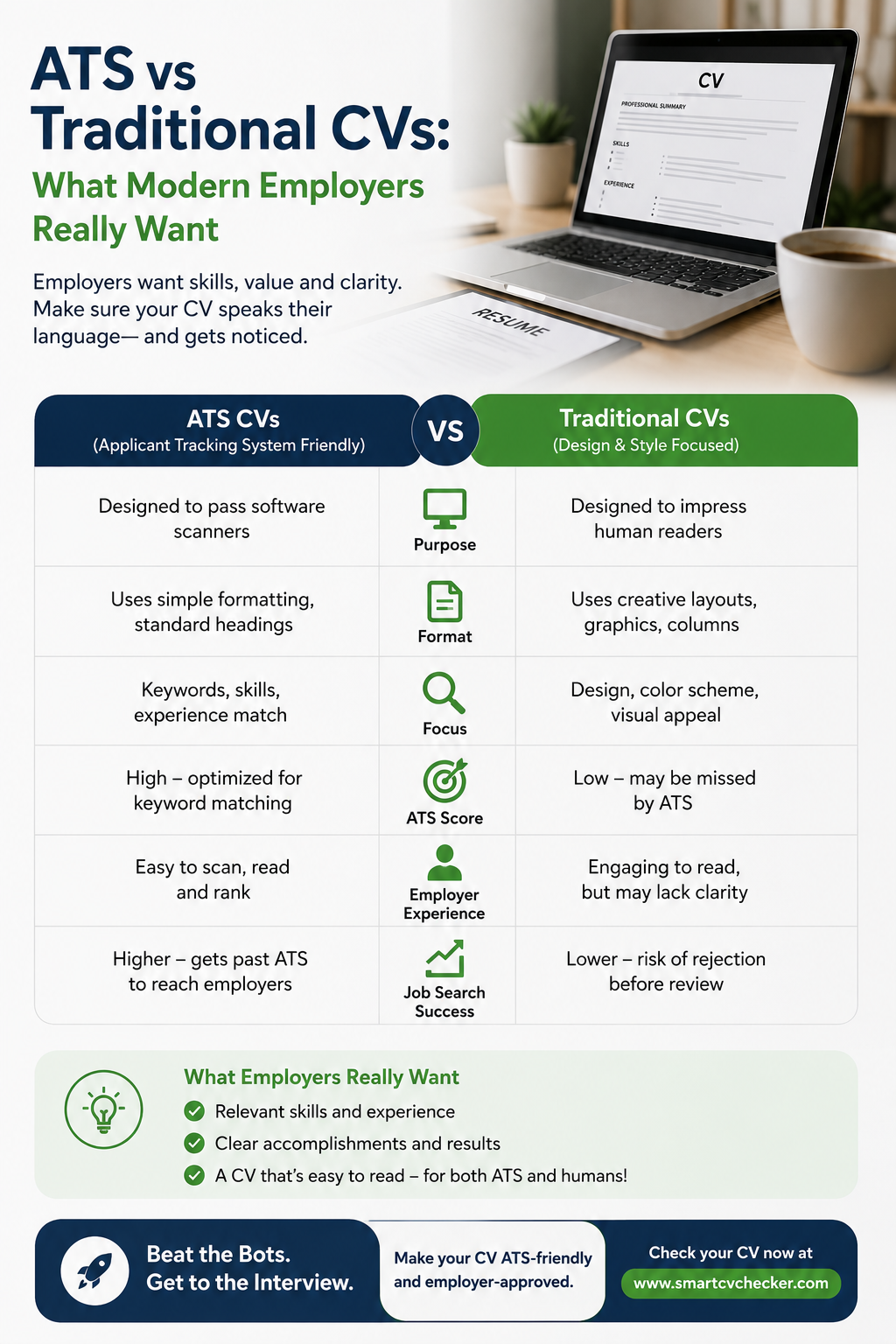
What Is a Traditional CV?
A traditional CV is generally designed primarily for human readers.
It may prioritize:
creative layouts
visual design
multiple columns
graphics
icons
photographs
decorative elements
personalized formatting
extensive descriptions
There is nothing inherently wrong with making a CV visually appealing.
In certain situations, particularly creative industries, design can demonstrate a candidate's abilities.
However, the problem begins when design becomes more important than clarity, relevance and readability.
A CV can look fantastic and still fail to communicate your qualifications effectively.
What Is an ATS-Friendly CV?
An ATS-friendly CV is structured with modern recruitment technology in mind.
Applicant Tracking Systems, commonly known as ATS, help organizations manage and organize job applications.
An ATS-friendly CV generally focuses on:
clear structure
standard headings
relevant keywords
readable formatting
clearly defined experience
accurate job titles
relevant skills
measurable achievements
consistent employment dates
straightforward language
The objective is not to create a boring CV.
The objective is to create a CV that is easy to understand and process.
ATS vs Traditional CV: What's the Difference?
The biggest difference is the audience.
A traditional CV often asks:
“How can I make my CV look impressive?”
An ATS-friendly CV asks:
“How can I make my qualifications easy to identify?”
Modern job seekers should ask both questions—but in the right order.
First, make your qualifications clear. Then make your presentation professional.
1. Design vs Readability
Traditional CVs may use elaborate designs to attract attention.
ATS-friendly CVs prioritize readability.
This does not mean your CV should be ugly or unprofessional.
It means the design should support the content rather than compete with it.
A professional CV can still have:
strong typography
balanced spacing
clear section hierarchy
professional formatting
consistent alignment
appropriate use of emphasis
The key is moderation.
Your design should help the recruiter find information—not make them search for it.
2. Graphics vs Information
Traditional CVs sometimes use icons, charts and graphics to represent skills or experience.
For example, a candidate might represent their Excel skill with a graphic showing:
Excel — 90%
But what does 90% actually mean?
Can the employer interpret it consistently?
An ATS-friendly CV would communicate the skill directly:
Microsoft Excel | Financial Reporting | Data Analysis
Clear information is usually more useful than decorative representations.
3. Keywords Matter More Than Ever
One of the major differences between modern CVs and older approaches is the importance of job-specific terminology.
Employers describe their requirements using specific language.
For example, a vacancy might request:
project management
stakeholder engagement
monitoring and evaluation
budget management
data analysis
reporting
Microsoft Excel
If you genuinely possess these skills, your CV should communicate them clearly.
Instead of using vague language such as:
Experienced professional with strong organizational abilities.
You can be more specific:
Experienced project professional with skills in project coordination, stakeholder engagement, monitoring and evaluation, data analysis and reporting.
The second version gives both the recruitment system and recruiter more useful information.
4. Job Duties vs Achievements
Traditional CVs often contain long lists of responsibilities.
For example:
Responsible for preparing reports.
An effective modern CV goes further.
Prepared monthly reports to support management decision-making and improve information accuracy.
Even better, where the evidence exists:
Prepared 20+ monthly reports, improving reporting turnaround time by 25%.
Modern employers want to know more than what you were assigned to do.
They want to understand:
What did you accomplish?
That is why achievement-focused CV writing is becoming increasingly important.
5. Generic CV vs Targeted CV
A traditional approach may involve creating one CV and sending it to every employer.
Modern recruitment requires greater customization.
A finance position may emphasize:
financial reporting
reconciliation
budgeting
taxation
compliance
A monitoring and evaluation role may emphasize:
data collection
indicators
performance measurement
reporting
research
results-based management
A project management position may emphasize:
project planning
stakeholder engagement
budgeting
risk management
coordination
reporting
Your experience may be the same, but the emphasis should change according to the opportunity.
6. Length vs Relevance
One of the biggest misconceptions about CVs is that a longer CV is automatically stronger.
It isn't.
A 10-page CV filled with irrelevant information can be less effective than a concise CV that clearly demonstrates the qualifications required for the position.
Modern employers want relevance.
Before including something, ask:
Does this information help demonstrate that I am suitable for this position?
If the answer is no, consider removing it or reducing it.
7. Responsibilities vs Value
Employers are not simply hiring people to occupy positions.
They are looking for people who can contribute value.
Compare:
Traditional:
Managed customer complaints.
Stronger:
Resolved customer complaints, coordinated follow-ups and maintained accurate service records to support improved customer satisfaction.
The second statement communicates activity, responsibility and purpose.
Your CV should tell a story about the value you bring.
8. Creativity vs Professionalism
Does ATS optimization mean you should remove all creativity from your CV?
No.
Professionalism does not require a boring document.
You can create an attractive CV while maintaining ATS-friendly principles.
Consider using:
a clean layout
professional typography
consistent spacing
clear headings
subtle formatting
strong achievement statements
logical organization
The principle is simple:
Make your CV visually professional without making it technically complicated.
What Modern Employers Really Want
Behind the ATS discussion is a more important question:
What are employers actually looking for?
They want candidates who can demonstrate:
Relevant qualifications
Your education, certifications and professional training should match the requirements of the role.
Relevant experience
Show experience that demonstrates your ability to perform the job.
Relevant skills
Highlight technical and transferable skills that matter to the position.
Evidence of performance
Achievements are more powerful when they demonstrate measurable results.
Professional communication
Your CV should be clear, accurate and professionally written.
Adaptability
Employers increasingly value people who can learn, solve problems and adapt to changing environments.
Integrity
Never add qualifications, skills or experience you do not actually possess.
The Best CV Is Not ATS OR Human-Friendly
This is where many job seekers get confused.
They think they have to choose:
ATS-friendly CV
OR
Recruiter-friendly CV
You don't.
The strongest CV should be both.
Think about it this way:
ATS compatibility gets your information processed clearly.
Good CV writing gets your value understood.
Professional presentation makes the document easier to read.
All three matter.
The Modern CV Formula
A strong modern CV can be built around this formula:
RELEVANCE + CLARITY + KEYWORDS + ACHIEVEMENTS + PROFESSIONAL PRESENTATION
Remove one of these and your CV may become weaker.
A beautiful CV without relevance is ineffective.
A keyword-filled CV without evidence is weak.
An ATS-compatible CV without achievements can still fail to impress.
A strong CV combines everything.
10 Signs Your CV May Be Outdated
Your CV may need an update if:
You use the same CV for every application.
Your professional summary is generic.
You list responsibilities but not achievements.
Your CV contains excessive graphics.
Your skills are described vaguely.
You rarely use terminology from the job description.
Your most relevant experience is difficult to find.
Your CV contains unnecessary information.
Your formatting is inconsistent.
You have never tested whether your CV is ATS-friendly.
If several of these apply to you, it may be time for a CV transformation.
The Future of CVs Is About Relevance
The modern job market is becoming increasingly competitive.
Employers have more applications to manage.
Recruitment technology continues to evolve.
Candidates therefore need to become more strategic.
The winning CV is not necessarily the most colorful.
It is not necessarily the longest.
It is not necessarily the most creative.
It is the CV that clearly connects the candidate's real qualifications to the employer's needs.
That is what modern employers really want.
Before You Apply, Check Your CV
Don't wait until you have submitted dozens of applications to discover that your CV could have been stronger.
Before applying, review your CV for:
ATS compatibility.
Keyword relevance.
Professional structure.
Achievement strength.
Job alignment.
Readability.
If you are unsure whether your CV is ready, use Smart CV Checker to assess and improve it before submitting your next application.
Instead of asking:
“Does my CV look good?”
Ask the more important question:
“Does my CV clearly communicate why I am qualified for this job?”
That is the mindset modern job seekers need.
Final Thought
The traditional CV was built around a simple idea:
“Here is my career history.”
The modern CV needs to do much more:
“Here is who I am, what I can do, what I have achieved, and why my experience is relevant to this opportunity.”
That is the difference between simply having a CV and having a strategic career document.
Your CV should not only look professional.
It should work for you.
Before your next application, check it, improve it, tailor it—and apply with confidence.
Your next opportunity could start with the CV you improve today.
More from the journal
Related reading
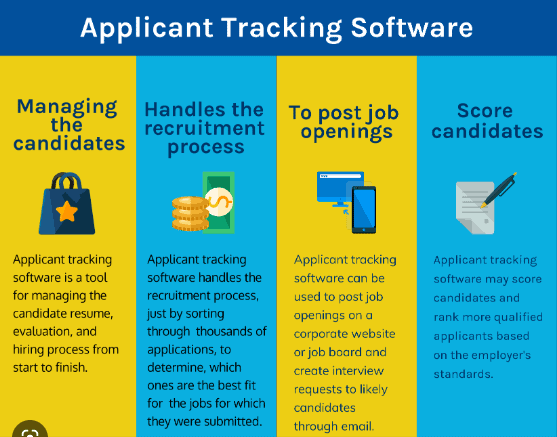
How ATS Systems Read Your CV: What Happens After You Click “Submit”?
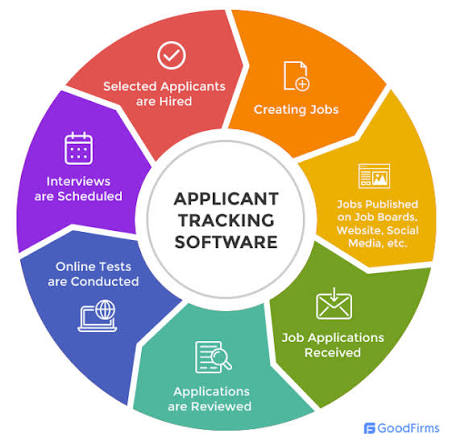
Applicant Tracking Systems: What Every Job Seeker Needs to Know